Stopping water first
The contractor looks for the most likely entry points and stabilizes them with temporary protection so interior damage doesn't continue.
Serving Live Oak, Florida & surrounding areas
Calls answered around the clock
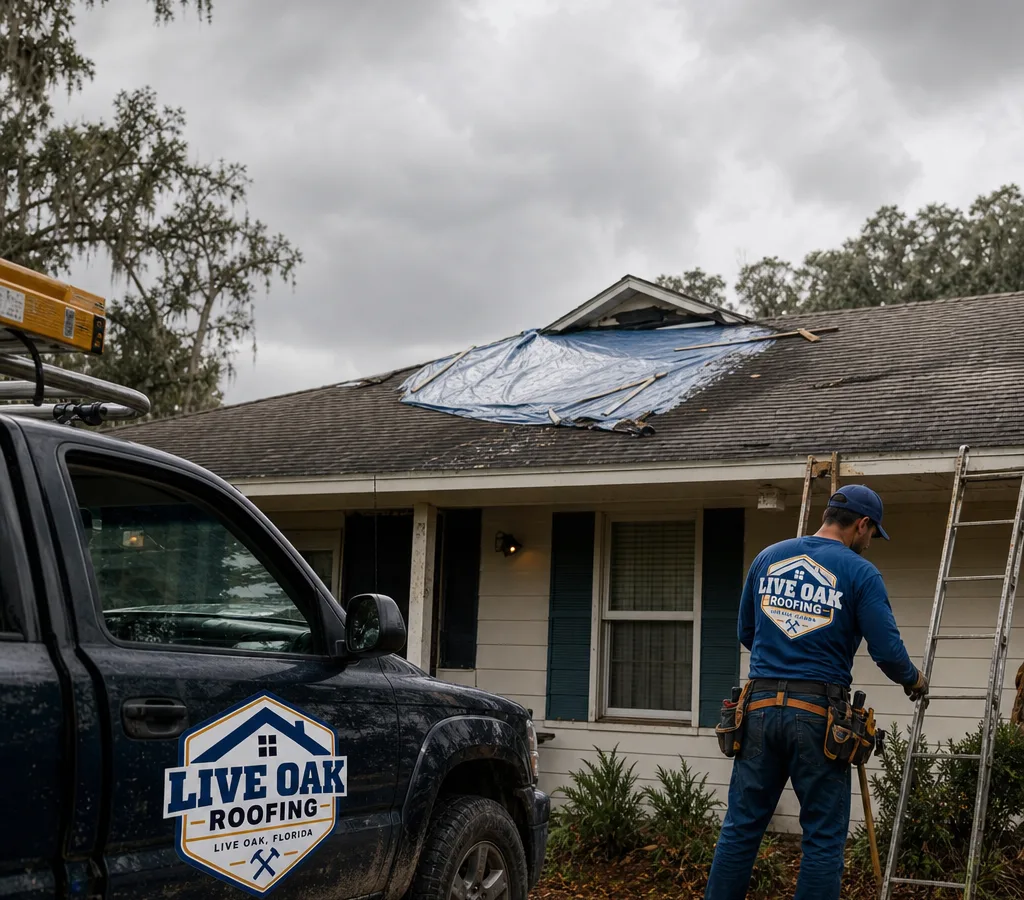
Emergency roof service · Live Oak, Florida
Describe what happened once and we'll connect you with a local roofing contractor who handles leak stops, tarping, and urgent repairs in the Live Oak area.
CALL NOW: (386) 339-3503Urgent roof response
When water is getting into the house, the goal is simple: stop the intrusion, protect the interior, and prevent the damage from spreading while you plan the permanent fix. Emergency Roof Services Live Oak FL typically focus on temporary weather protection and targeted repairs that keep the home stable until conditions allow full work.
Live Oak roofs often take a beating from Florida thunderstorms, wind-driven rain, fallen limbs, and fast-moving squalls. Even a small opening can push water into insulation and ceilings, then down walls into outlets and flooring. If you're seeing active drips, ceiling staining that is growing, or shingles and metal panels missing after a storm, it's time to talk with a roofer.
Live Oak Roofing is a referral service. When you call, you describe what you're seeing and what kind of roof you have. We then connect you with a local contractor who can assess the situation and talk through the next steps directly with you.
A contractor's first job is usually to identify the entry point and apply a controlled, temporary fix—often tarping or sealing—so the home stays protected while they evaluate whether a spot repair is enough or whether the surrounding area needs more extensive work.
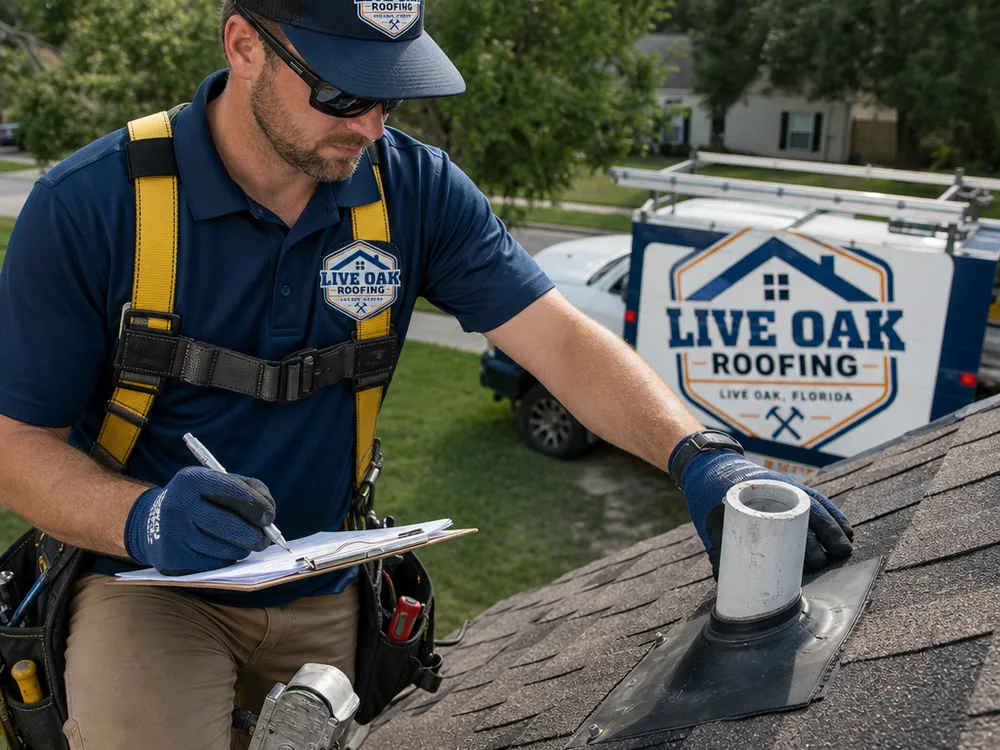
Stabilize, trace, assess
The contractor looks for the most likely entry points and stabilizes them with temporary protection so interior damage doesn't continue.
Roof leaks can travel along decking and rafters. Pros trace staining patterns, check penetrations, and inspect valleys and transitions.
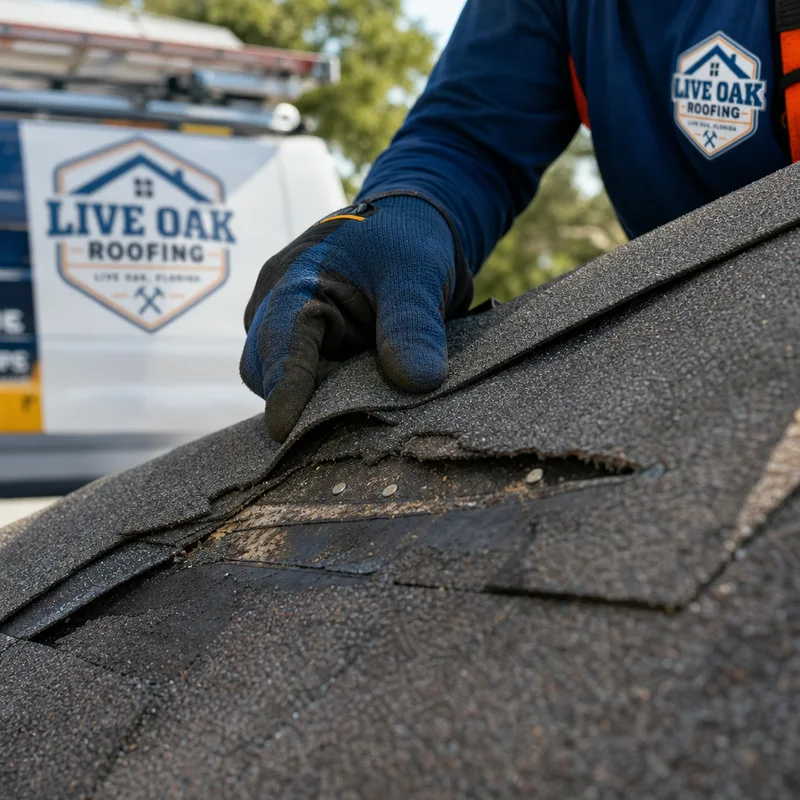
Impact can break shingles and also crack decking or loosen fasteners. The contractor looks for soft spots and compromised sheathing.
You'll hear whether you're looking at a targeted repair, a partial replacement area, or a larger scope once the roof is dry and safe to work.
We connect you with a local contractor. You discuss options and timing directly, and you decide what work to approve.
One call, direct conversation
Share what you're seeing—dripping, missing shingles, or a limb strike—where it's showing up inside, and any photos you can reference during the call.
Live Oak Roofing connects you with an independent contractor who works in the Live Oak area and takes on urgent roof calls.
The contractor asks about roof type, height, access, and recent weather. They'll explain what they can do to stabilize the roof and what to expect next.
You get the plan and any terms directly from the contractor, then choose whether to schedule the work.
If water is getting in, describe the leak location, roof type, and what changed so a local roofer can advise on the safest way to stop it.
Urgent roof details
Clear answers
The most useful details are what you're seeing inside—drip, stain, or bubbling paint—the room location, and what changed recently, such as a storm, branch impact, or new leak. If you know the roof type and approximate height, that helps the contractor plan access and materials.
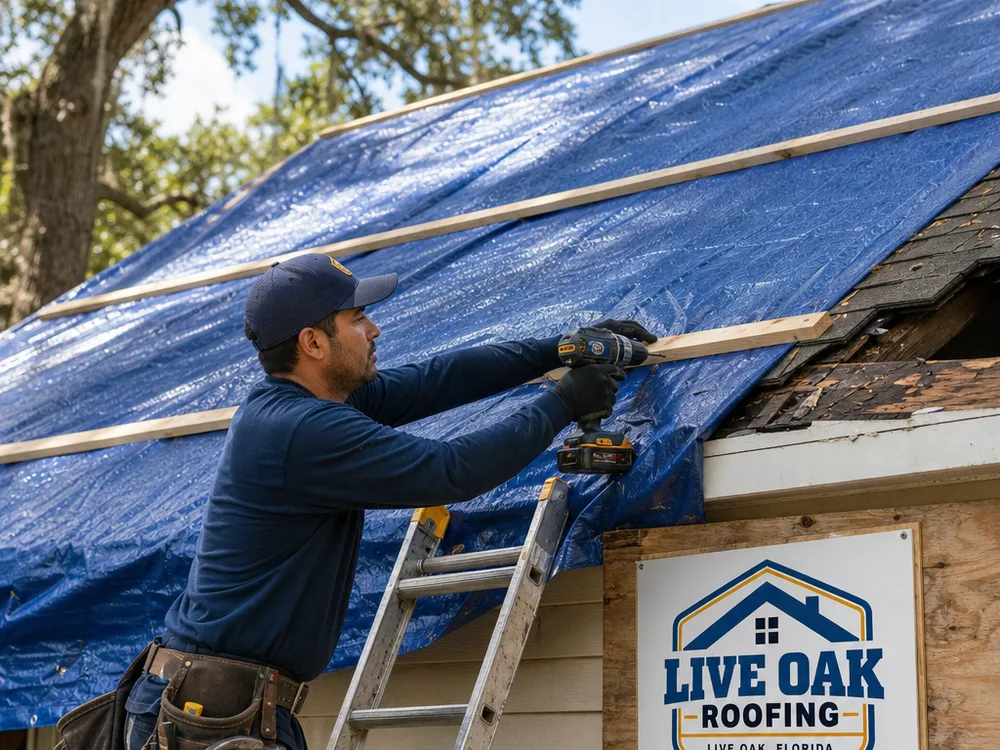
Tarping is usually temporary protection to keep water out until permanent repairs can be completed. A roofer typically uses tarps with battens or other securement methods so wind doesn't turn the tarp into a sail, then follows up with repair work once the damaged area can be safely opened and rebuilt.
Water can travel along the underside of roof decking, down rafters, or along HVAC and plumbing runs before it drops into the ceiling. Contractors often check penetrations, valleys, and flashing details upslope from the interior symptom, and an attic look can help confirm the path.
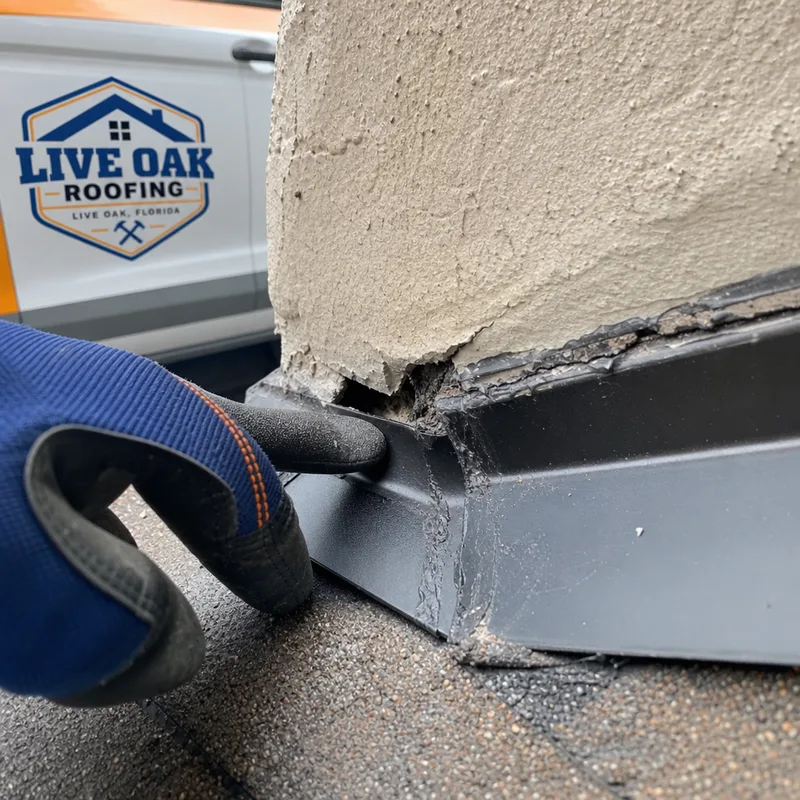
The contractor typically starts by identifying obvious openings such as missing shingles or panels, punctures, and displaced flashing, then confirms the likely water path. On shingle roofs, that often includes valleys, roof-to-wall flashing, pipe boots, ridge lines, and underlayment where wind may have lifted edges.
Sometimes, if the damage is limited and surrounding materials remain sound and properly sealed. A roofer will look for lifted shingle edges, torn adhesive strips, compromised underlayment, and nail-line exposure, then explain whether a localized repair is reasonable or a larger area needs attention.
Impact can damage the deck and framing even when the exterior looks minor. Mention sagging areas, cracking sounds during the storm, or doors that suddenly stick, and keep people out of rooms below any visibly compromised ceiling until the contractor can assess it.
Live Oak Roofing connects homeowners to local contractors who handle urgent roof problems in the Live Oak area. You describe the situation once, then speak directly with the contractor about inspection findings, repair options, and scheduling.
One call starts the connection
Pick up the phone and describe what you're seeing. We'll connect you with a local roofing contractor who can talk through tarping, leak tracing, and repair options for your roof.